

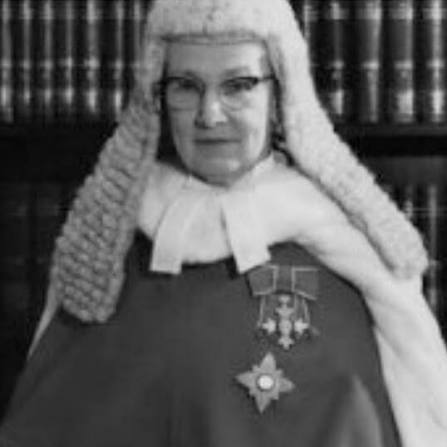
You are about to learn who Elizabeth Lane was, what she broke through to get there, and why her name still shows up in searches decades after her death. Her career opened doors in the legal profession that had been shut to women for centuries, which is exactly why her story keeps getting rediscovered.
Background: Who Was Elizabeth Lane?
Dame Elizabeth Kathleen Lane was an English barrister and judge who became the first woman to sit as a judge in the County Court, the first woman appointed to the High Court, and the first female bencher at any Inn of Court in England. Those are not small titles. Each one meant she was walking into a room that had never allowed a woman in that seat before.
People search her name today for a few different reasons. Some are law students or history readers researching the first women to break into the judiciary. Others land on her page by accident, since there are several public figures who share the name Elizabeth Lane, including a modern Church of England bishop and a fictional film character. This article focuses specifically on the barrister and judge who died in 1988.
Latest Update
There is no new confirmed development regarding Elizabeth Lane, since she passed away in 1988. Her page continues to draw search traffic mainly because of ongoing interest in legal history, the anniversary of certain milestones in women’s rights, and confusion with other people who share her name. Nothing about her recorded biography has changed recently, and no new documents or claims about her life have surfaced as of this date.
💬 Why this matters: Because Elizabeth Lane died before search engines and social media existed, her online presence is built entirely from historical and legal archives rather than personal posts, which is part of why her page reads differently from a living celebrity’s profile.
Full Profile
Family and Early Life
Elizabeth Lane was born Elizabeth Kathleen Coulborn on August 9, 1905, in Bowdon, Cheshire, England. Her father, Edward Alexander Coulborn, ran a mill, and her mother was named Kate Wilkinson. She was educated at home for much of her early childhood and spent a year living in Switzerland with her family right before World War One started.
Career Path
After her husband decided to train as a barrister in 1936, the two of them studied law together, which is an unusual and pretty remarkable detail on its own. She became a student member of the Inner Temple in November 1937 and was officially called to the bar in the summer of 1940. She built her early practice on the Midland Circuit, focusing on civil cases.
Her rise through the legal system took decades of steady work. She was appointed King’s Counsel in 1950, becoming only the third woman in England to reach that rank. She then served as Assistant Recorder of Birmingham, chaired Mental Health Tribunals, and worked as a Commissioner of the Crown Courts in Manchester before becoming Recorder of Derby. In 1962, she became the first female judge in the County Court, and in 1965 she made history again as the first woman to sit in the High Court, which came with the honorary title of Dame. A year later, she became the first female bencher of any Inn of Court in the country. Between 1971 and 1973, she chaired a national committee reviewing how the Abortion Act was working in practice, personally writing most of the report’s first volume.
Age
Elizabeth Lane was 82 years old when she died on June 17, 1988. She had been born on August 9, 1905.
Religion
No verified public record confirms Elizabeth Lane’s personal religious beliefs or affiliation, so this detail is unconfirmed.
Spouse/Partner
She married Randall Lane on January 14, 1926, in Didsbury, England, after meeting him in Montreal in 1924 while visiting her brother. The couple later settled in Manchester together. Randall Lane went on to become a legal adviser to the British Council and died in 1975, thirteen years before his wife.
Net Worth
No verifiable net worth figure exists for Elizabeth Lane. As a public servant working in law during the twentieth century rather than a modern celebrity, her finances were never tracked the way they might be for a public figure today, so any number here would be a guess rather than a fact.
Parents
Her father, Edward Alexander Coulborn, worked as a mill owner, and her mother’s name was Kate Wilkinson. Beyond these basic facts, little else about her parents has been publicly documented.
Height
Elizabeth Lane’s height was not recorded in any public source available today, so this detail is unconfirmed.
Education
She was homeschooled as a young child, then attended Twizzletwig School in Hindhead, Surrey, followed by Malvern Girls’ College. She originally decided against attending university, though she later studied law privately alongside her husband starting in the 1930s, which eventually led to her bar exam in 1940.
Hometown/State of Origin
Elizabeth Lane was born in Bowdon, Cheshire, England, and later lived for much of her adult life in Manchester before retiring to Winchester.
Official Social Media
Because Elizabeth Lane died in 1988, well before social media existed, there is no official personal account to link to. The closest verified institutional record of her career is her professional profile held by the Inner Temple, which can be found through the Inner Temple Library website.
✅ Quick fact check: Every detail above comes from her documented biography and legal career records. Where information like her personal finances or exact religious beliefs was never publicly recorded, we said so rather than guessing.
Career Timeline
| Year | Milestone |
|---|---|
| 1905 | Born in Bowdon, Cheshire |
| 1926 | Marries Randall Lane in Didsbury |
| 1928 | Son John is born |
| 1937 | Becomes a student member of the Inner Temple |
| 1940 | Called to the bar |
| 1950 | Appointed King’s Counsel, third woman in England to hold the rank |
| 1962 | Becomes first female County Court judge |
| 1965 | Becomes first woman appointed to the High Court; created Dame Commander of the British Empire |
| 1966 | Becomes first female bencher of any Inn of Court |
| 1971–1973 | Chairs national inquiry into the Abortion Act |
| 1979 | Retires and moves to Winchester |
| 1985 | Publishes autobiography, Hear the Other Side |
| 1988 | Dies in Winchester at age 82 |
Reader Questions (FAQ)
Who was Elizabeth Lane?
Elizabeth Lane was an English barrister who became the first woman appointed as a judge in the County Court and later the first woman to sit in England’s High Court. She practiced law for decades before reaching those milestones in 1962 and 1965.
Is Elizabeth Lane the judge still alive?
No. Elizabeth Lane died on June 17, 1988, in Winchester, England, at age 82. This article is about her documented life and career rather than any current event.
What was Elizabeth Lane famous for?
She is best known for becoming the first female High Court judge in England in 1965. She also chaired a national committee that reviewed the Abortion Act between 1971 and 1973.
Who was Elizabeth Lane married to?
She was married to Randall Lane, whom she met in Montreal in 1924. They married in 1926 and remained married until his death in 1975.
Did Elizabeth Lane have children?
Yes. She had a son named John, born in 1928, who had brain damage caused by epilepsy and died as a teenager from pneumonia.
Why does Elizabeth Lane’s Wikipedia page keep coming up in searches?
Her page continues to draw traffic from people researching legal history and women’s rights milestones, as well as from people who confuse her with other public figures who share the name Elizabeth Lane. No new development has caused a recent spike as of this update.
What did Elizabeth Lane accomplish besides becoming a judge?
She was appointed King’s Counsel in 1950 as only the third woman in England to hold that rank, and in 1966 she became the first female bencher of any Inn of Court. She also wrote most of the first volume of a major government report on the Abortion Act.
⚠️ A note on accuracy: Several public figures share the name Elizabeth Lane, including a modern bishop and a fictional character. This article covers only the English barrister and judge who lived from 1905 to 1988.
Wrap-Up
Elizabeth Lane’s career is really a study in how slowly institutions change and how much persistence it takes to change them anyway. She didn’t start law school as a young woman with a clear path ahead of her; she studied privately alongside her husband in her thirties, got called to the bar at 35, and then spent roughly twenty-five more years working her way up before reaching the High Court.
What makes her story worth revisiting isn’t just the list of firsts attached to her name. It’s the fact that every one of those firsts had to happen before the next generation of women in law could take them for granted. Her being included in later ceremonies honoring female judiciary trailblazers, decades after her death, says a lot about how her legacy is remembered inside the profession she helped open up.
For anyone landing on her page while researching a completely different, modern Elizabeth Lane, the honest answer is that this particular one has been gone since 1988. Her real story is a legal one, not a current-events one, and that’s exactly why it still holds up as a piece of history worth reading.

John Wood is the founder and lead editor of Biography Region. He researches and writes accurate, engaging biographies of celebrities, entrepreneurs, influencers, and public figures, delivering well-sourced, reader-focused content that informs and inspires.