

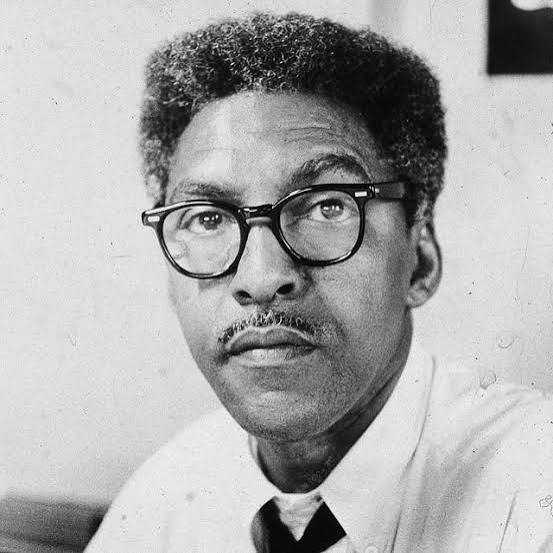
Bayard Rustin organized one of the largest protests in American history, the 1963 March on Washington, yet he often had to work in the background because he was openly gay at a time when that made him a target within and outside the movement. This is his life story.
Background
People search Bayard Rustin’s name more today than in decades past, partly because his contributions were historically underplayed due to homophobia within and outside civil rights leadership circles, and partly because of renewed public recognition, including a posthumous Presidential Medal of Freedom.
Latest Update
As of August 2026, Rustin’s legacy continues to receive expanded recognition through documentaries, biographies, and educational curricula that specifically address how his sexuality affected his standing within the movement at the time. No new biographical fact has recently emerged; renewed attention reflects an ongoing broader effort to fully credit his organizing work.
Full Profile
Family and Early Life
Rustin was born in 1912 in West Chester, Pennsylvania, and raised primarily by his grandparents, who were active in the local NAACP chapter, which exposed him early to civil rights activism and Quaker principles of nonviolence.
Career Path
Rustin worked with A. Philip Randolph and later Martin Luther King Jr., introducing Gandhian nonviolent protest strategies to the American civil rights movement. He was the chief organizer of the 1963 March on Washington for Jobs and Freedom, coordinating logistics for a quarter-million attendees, though he often stayed out of the public spotlight due to concerns from other leaders about his sexuality being used against the movement.
Age
Rustin lived to age 75, born March 17, 1912, and dying August 24, 1987.
Religion
Rustin was raised Quaker by his grandparents, and Quaker principles of pacifism and nonviolence heavily influenced his approach to activism throughout his life.
Spouse/Partner
Rustin was openly gay for much of his adult life, unusual and often risky for the era; later in life he had a long-term partner, Walter Naegle, whom he legally adopted as his son in 1982 due to the lack of legal recognition for same-sex partnerships at the time.
Net Worth
Rustin worked primarily as an organizer and strategist for nonprofit civil rights and labor organizations. A specific net worth figure is not documented and would be speculative.
Parents
His biological parents are not consistently documented in public records; he was primarily raised by his maternal grandparents, Julia and Janifer Rustin.
Height
No widely documented height records exist for Bayard Rustin from contemporary sources.
Education
Rustin attended Wilberforce University and Cheyney State Teachers College in Pennsylvania, though he did not complete a degree at either before moving into full-time activism.
Hometown/State of Origin
Rustin was born and raised in West Chester, Pennsylvania.
Official/Archival Link
Bayard Rustin Center for Social Justice
Legacy and Lasting Impact
Rustin’s legacy has grown substantially in recent decades as historians and educators have worked to fully credit organizers whose contributions were minimized during their lifetimes due to discrimination. His 2013 posthumous Presidential Medal of Freedom marked a significant formal recognition of that corrected historical record.
His life is now frequently taught alongside discussions of intersectionality within civil rights history, showing how a person can face discrimination from multiple directions, racial and anti-gay bias, even while playing an indispensable role in a movement fighting for justice.
| Date | Event |
|---|---|
| 1912 | Born in West Chester, Pennsylvania |
| 1930s | Becomes involved in pacifist and civil rights activism |
| 1955-1956 | Advises Martin Luther King Jr. during the Montgomery Bus Boycott |
| 1963 | Serves as chief organizer of the March on Washington |
| 1982 | Legally adopts partner Walter Naegle |
| 1987 | Dies in New York City |
| 2013 | Posthumously awarded the Presidential Medal of Freedom |
Historical Context
Rustin’s early exposure to Gandhian nonviolent resistance came partly through his work with the Fellowship of Reconciliation and later a trip to India, giving him direct, firsthand study of nonviolent tactics that he later helped translate into the American civil rights context well before the Montgomery Bus Boycott began.
That background made him one of the movement’s most technically experienced strategists on nonviolent tactics specifically, which is part of why leaders like Martin Luther King Jr. sought his advice directly during the early Montgomery organizing period, despite the political risk of being publicly associated with him.
Reader Questions (FAQ)
What is Bayard Rustin best known for?
He is best known as the chief organizer of the 1963 March on Washington for Jobs and Freedom, where Martin Luther King Jr. delivered his ‘I Have a Dream’ speech.
Why did Bayard Rustin often stay behind the scenes?
Because he was openly gay, some civil rights leaders worried his sexuality would be used by opponents to discredit the movement, so he frequently worked in an organizing capacity rather than as a public spokesperson.
Did Bayard Rustin work with Martin Luther King Jr.?
Yes, he advised King on nonviolent protest strategy, drawing on Gandhian principles, and helped shape tactics used throughout the civil rights movement.
Did Bayard Rustin receive recognition later in life?
Yes, he received increasing recognition in his later years and was posthumously awarded the Presidential Medal of Freedom in 2013 by President Barack Obama.
Was Bayard Rustin married?
Same-sex marriage was not legally recognized during his lifetime. He had a long-term partner, Walter Naegle, whom he legally adopted as his son in 1982 to secure legal protections.
Why is Bayard Rustin discussed more now than in past decades?
Historical and cultural shifts have led to broader recognition of LGBTQ+ contributions to the civil rights movement, prompting renewed attention to Rustin’s organizing work that was previously downplayed.
Was Bayard Rustin ever arrested because of his sexuality?
Yes, he was arrested in 1953 on a morals charge related to his sexuality, an event that was later used by political opponents to try to discredit him and, by association, civil rights leaders he worked with.
Did Bayard Rustin work on labor issues as well as civil rights?
Yes, beyond civil rights organizing, he also worked extensively on labor and economic justice issues later in his career, including with the A. Philip Randolph Institute.
Did Bayard Rustin face backlash from within the civil rights movement itself?
Yes, some leaders distanced themselves from him publicly at times specifically due to his sexuality and past arrest, even while privately relying on his strategic expertise for major campaigns.
What labor organization did Rustin later lead?
He led the A. Philip Randolph Institute, focusing on connecting civil rights goals with labor movement organizing and economic justice work later in his career.
Wrap-Up
Bayard Rustin’s life shows how movements are shaped by people who don’t always get equal credit at the time. He built the logistical and strategic backbone of one of the most famous protests in American history while facing discrimination from within his own movement.
His later-life recognition, including the Presidential Medal of Freedom, reflects a broader correction in how history credits organizers who worked outside the spotlight, especially those facing additional barriers like Rustin did as an openly gay man.
For readers today, Rustin’s story adds necessary depth to the civil rights movement’s history, showing that its success depended on more than just its most publicly recognized leaders.
His story continues to be a central reference point in conversations about how movements sometimes fail to fully credit the people who make their biggest moments possible.
Rustin’s early pacifist activism also included time in federal prison during World War Two for refusing the draft as a conscientious objector, an experience that further shaped his lifelong commitment to nonviolent resistance as both a moral and strategic choice.
It’s also worth noting that Rustin’s early experience organizing the 1947 Journey of Reconciliation, an earlier and less well-known precursor to the 1961 Freedom Rides testing desegregation on interstate buses, gave him direct, firsthand tactical experience that proved directly useful more than a decade later when he helped shape strategy for the larger, more widely remembered Freedom Rides campaign.
That earlier campaign is a useful reminder that major historical moments often build directly on smaller, less remembered efforts that came before them.
That combination of tactical experience and personal risk is central to understanding why his strategic contributions mattered so much to the movement’s biggest moments.
His story continues to prompt broader conversations about how movements sometimes sideline the very organizers whose planning made their most celebrated victories possible in the first place.

John Wood is the founder and lead editor of Biography Region. He researches and writes accurate, engaging biographies of celebrities, entrepreneurs, influencers, and public figures, delivering well-sourced, reader-focused content that informs and inspires.