

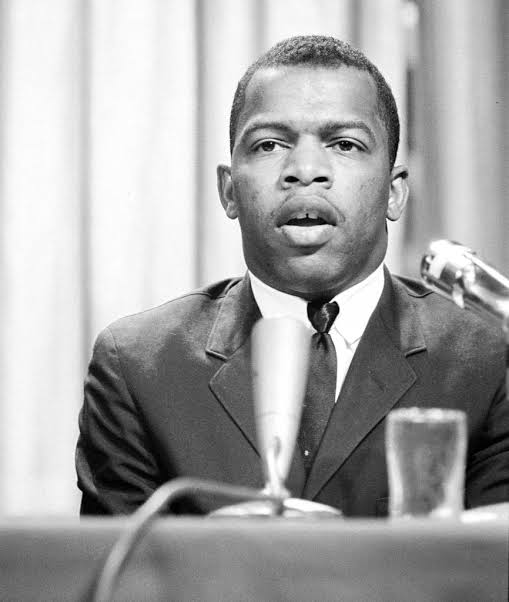
Before John Lewis became a longtime U.S. congressman and civil rights icon, he was a boy in rural Alabama who reportedly practiced preaching to the chickens on his family’s farm. This article covers his early life and how it set the direction for his later activism.
Background
People search John Lewis’ early life to understand what shaped someone who would go on to lead the Nashville sit-ins, help organize the March on Washington, and survive a brutal beating on the Edmund Pettus Bridge in Selma, all before turning 30.
Latest Update
As of August 2026, John Lewis’ early life and full career continue to be documented through educational curricula, his graphic novel memoir series ‘March,’ and ongoing commemorations tied to the Selma voting rights anniversary each March. Lewis passed away in 2020; no new details about his early life have recently emerged.
Full Profile
Family and Early Life
Lewis was born in 1940 near Troy, Alabama, into a family of sharecroppers. As a child, he had chores that reportedly included caring for the family’s chickens, and he has described practicing sermons to them, foreshadowing his early interest in preaching and public speaking. Segregation in rural Alabama shaped much of his early childhood experience.
Career Path
Lewis became active in the civil rights movement as a college student, participating in the Nashville sit-in movement, becoming a founding member and later chairman of the Student Nonviolent Coordinating Committee (SNCC), and serving as one of the original Freedom Riders in 1961. He helped organize the 1963 March on Washington and, in 1965, was severely beaten by state troopers while leading a voting rights march across the Edmund Pettus Bridge in Selma, an event now known as ‘Bloody Sunday.’ He later served as a U.S. Representative from Georgia for over three decades.
Age
Lewis lived to age 80, born February 21, 1940, and dying July 17, 2020.
Religion
Lewis was raised in a devout Baptist family and had an early interest in becoming a minister, which connected closely to his later commitment to nonviolent activism.
Spouse/Partner
Lewis married Lillian Miles in 1968; the couple remained married until her death in 2012 and had one son together.
Net Worth
As a longtime member of Congress, Lewis’ finances were generally modest relative to many members of Congress; a specific net worth figure is not consistently documented in reliable public sources and is treated here as unconfirmed.
Parents
His parents were Eddie Lewis and Willie Mae Lewis, sharecroppers in rural Alabama.
Height
No widely documented height records exist for John Lewis from contemporary sources.
Education
Lewis attended segregated public schools in rural Alabama before earning a degree from American Baptist Theological Seminary in Nashville and later a degree in religion and philosophy from Fisk University.
Hometown/State of Origin
Lewis was born and raised near Troy, Alabama.
Official/Archival Link
Archived Official Website of Congressman John Lewis
Legacy and Lasting Impact
Lewis carried the lessons of his early life directly into his decades of public service, often describing his congressional work as a continuation of the same fight he began as a young organizer, framing legislative work on voting rights as unfinished business from his activist years.
His memoir series ‘March,’ co-written in graphic novel form, has introduced his early life and civil rights work to a new generation of younger readers, extending his story’s reach well beyond traditional history books and classroom lectures.
Key Dates at a Glance
| Date | Event |
|---|---|
| 1940 | Born near Troy, Alabama |
| 1957-1961 | Attends American Baptist Theological Seminary and Fisk University |
| 1960 | Participates in the Nashville sit-in movement; helps found SNCC |
| 1961 | Serves as one of the original Freedom Riders |
| 1963 | Helps organize the March on Washington |
| 1965 | Leads the Selma to Montgomery march; injured on ‘Bloody Sunday’ |
| 1987-2020 | Serves as U.S. Representative for Georgia |
| 2020 | Dies at age 80 |
Historical Context
Rural Alabama in the 1940s and 1950s operated under a strict segregated social and legal system, with separate, unequal schools, facilities, and legal protections for Black residents, conditions Lewis experienced directly throughout his childhood on his family’s farm near Troy.
His early exposure to Black church culture, including regular preaching practice as a child, also connected him to a long tradition of Black religious leadership that historically doubled as community leadership, a tradition that shaped many civil rights leaders of his generation beyond Lewis alone.
Reader Questions (FAQ)
Where did John Lewis grow up?
He grew up on his family’s sharecropping farm near Troy, Alabama, in a rural, segregated community.
What did young John Lewis want to become?
He reportedly wanted to become a minister and has described practicing sermons to the chickens on his family’s farm as a child, showing an early interest in preaching and public speaking.
What is Bloody Sunday and John Lewis’ role in it?
Bloody Sunday refers to March 7, 1965, when Lewis and other marchers were violently attacked by state troopers while attempting to cross the Edmund Pettus Bridge in Selma, Alabama, during a voting rights march; Lewis suffered a skull fracture.
Was John Lewis a founding member of SNCC?
Yes, he was one of the founding members of the Student Nonviolent Coordinating Committee in 1960 and later served as its chairman.
Did John Lewis serve in government?
Yes, he served as a U.S. Representative for Georgia’s 5th congressional district for over three decades, from 1987 until his death in 2020.
Why do people still search for John Lewis’ early life today?
His transformation from a rural Alabama farm boy into one of the civil rights movement’s most enduring leaders is often used as an example of how personal conviction, shaped early, can lead to lasting national impact.
Did John Lewis write about his own life?
Yes, he co-authored the graphic novel memoir trilogy ‘March,’ detailing his early life and civil rights activism, which won a National Book Award and has been widely used in classrooms.
What happened to John Lewis’s Selma injuries long-term?
He suffered a skull fracture during the 1965 Bloody Sunday attack and carried visible scars from the incident for the rest of his life, often referencing the event directly in his later political work.
Did John Lewis meet any civil rights leaders early in his activism?
Yes, he corresponded with and was influenced early on by Martin Luther King Jr., whom he first wrote to as a young man seeking to challenge segregation in his own college admissions situation.
What congressional district did John Lewis represent?
He represented Georgia’s 5th congressional district, which includes much of Atlanta, from 1987 until his death in 2020.
Wrap-Up
John Lewis’ early life on an Alabama farm gave little outward indication of the national role he would eventually play, but the values formed there, faith, discipline, and a strong sense of right and wrong, carried directly into his activism.
By his early twenties, he had already helped lead major direct-action campaigns and endured serious violence for it, experiences that shaped both his commitment to nonviolence and his later decades of public service in Congress.
For readers today, Lewis’ early years are a useful starting point for understanding how a childhood shaped by rural segregation can turn into a lifelong commitment to changing the system that produced it.
That continuity, from a farm boy practicing sermons to a congressman still pushing voting rights legislation decades later, is part of what made his life story resonate as a single, coherent arc rather than several disconnected chapters.
Lewis often credited his rural Alabama upbringing, and the discipline instilled by his parents’ farm work, with giving him the endurance needed for decades of both direct-action activism and later legislative work, describing his approach to both as requiring the same patient, steady persistence.
It’s also worth noting that Lewis maintained close ties to his rural Alabama roots throughout his later political career, frequently returning to themes of his farming childhood in speeches about persistence and ‘good trouble,’ a phrase he became closely associated with that connected his earliest life experiences directly to his decades of later civil rights and legislative work.
That phrase, ‘good trouble,’ became something of a personal motto later in his life, tracing a direct line back to his earliest convictions.
That continuity between his childhood convictions and his later decades of public service is part of what made his story resonate across generations.

John Wood is the founder and lead editor of Biography Region. He researches and writes accurate, engaging biographies of celebrities, entrepreneurs, influencers, and public figures, delivering well-sourced, reader-focused content that informs and inspires.