

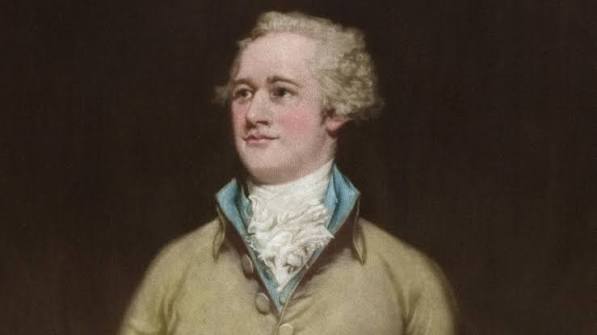
Most Founding Fathers grew up with land, tutors, and family names behind them. Alexander Hamilton had almost none of that. This article walks through his childhood on a small Caribbean island, the losses that shaped him, and how a poor, illegitimate orphan ended up helping write the American financial system.
Background
Alexander Hamilton is one of the most talked-about Founding Fathers today, partly because of his role building the U.S. financial system and partly because of the hit Broadway musical that introduced his life story to a new generation. People searching for his childhood usually want to know one thing: how did someone born with so little end up so influential? The answer starts on a tiny island most Americans have never visited.
Latest Update
As of August 2026, historians and biographers continue to study newly digitized colonial-era shipping and church records from the Caribbean to fill gaps in Hamilton’s earliest years, since so few original documents from his childhood survived. No major new discovery has been confirmed recently that changes the accepted timeline of his early life. Interest in his story remains steady, driven mostly by ongoing popular culture references rather than new historical findings.
Full Profile
Family and Early Life
Hamilton was born on the island of Nevis in the British West Indies, most historians place his birth year as 1755 or 1757 since the exact year is not fully settled in surviving records. His parents were not married, which was a significant social stigma at the time. His father, James Hamilton, left the family when Alexander was about ten years old. His mother, Rachel Faucette, died of a fever when he was thirteen, leaving him and his older brother James Jr. orphaned with almost no money.
Career Path
As a boy, Hamilton worked as a clerk for a trading company on St. Croix, where he learned bookkeeping, shipping, and business math, skills that later proved useful when he helped design the U.S. financial system. Local adults recognized his intelligence and writing talent, and a group of community members raised money to send him to the American colonies for a formal education, first at a preparatory school in New Jersey and then at King’s College, now Columbia University, in New York.
Age
Hamilton was likely around 13 years old when his mother died and he began working full time, and around 17 or 18 when he arrived in New York to continue his education.
Religion
Hamilton was raised in the Presbyterian tradition through his mother’s side, though his religious life became more devout later in life, especially after personal tragedies in adulthood. Details of his specific childhood religious practice are not fully documented.
Spouse/Partner
This falls outside his childhood years, but for context: Hamilton married Elizabeth Schuyler in 1780 as an adult, well after the childhood period covered here.
Net Worth
As a child, Hamilton had no personal wealth and relied on community support and his own clerking wages. Estimating a childhood net worth is not meaningful or verifiable.
Parents
His father was James Hamilton, a Scottish merchant from a noble but financially struggling family. His mother was Rachel Faucette, who had left an earlier unhappy marriage before meeting James. Their relationship was never formalized by marriage.
Height
No reliable childhood height records exist for Hamilton. As an adult he was often described as of average or slightly below average height for the period, though exact measurements are unconfirmed.
Education
Hamilton had informal early schooling on St. Croix and reportedly taught himself extensively through reading. Community donors funded his formal education in New Jersey and then at King’s College in New York, where his childhood self-teaching gave him an advantage.
Hometown/State of Origin
Hamilton was born on the island of Nevis and spent most of his boyhood on the nearby island of St. Croix, both in the British West Indies (present-day St. Kitts and Nevis, and U.S. Virgin Islands respectively).
Official/Archival Link
National Archives: Founders Online – Alexander Hamilton Papers
Legacy and Lasting Impact
Hamilton’s childhood matters beyond biography trivia because it directly explains his adult priorities. The bookkeeping and trade experience he picked up as a working boy in a Caribbean port shaped how he later thought about credit, debt, and a national economy, ideas that became the foundation of the U.S. financial system he built as the first Secretary of the Treasury.
His story is also frequently used in modern discussions about immigration and opportunity, since he arrived in the American colonies as a teenager with no family wealth or connections, funded entirely by strangers who believed in his ability. That path from an outsider with nothing to one of the most influential figures in early American government is part of why his early life continues to draw attention well over two centuries later.
| Date | Event |
|---|---|
| c. 1755/1757 | Born on the island of Nevis, British West Indies |
| c. 1765 | Father James Hamilton leaves the family |
| 1768 | Mother Rachel Faucette dies; Hamilton is orphaned |
| 1768-1772 | Works as a clerk for a trading company on St. Croix |
| 1772 | Community donors fund his move to the American colonies for schooling |
| 1773 | Enrolls at King’s College (now Columbia University) in New York |
Historical Context
Historians studying the Caribbean colonial economy note that Hamilton’s boyhood exposure to a busy international trading port gave him something few mainland-born colonists had: firsthand experience with currency exchange, shipping insurance, and cross-border commerce. Nevis and St. Croix sat at the center of Atlantic trade routes carrying sugar, credit, and goods between Europe, Africa, and the Americas.
That environment meant a working clerk like the teenage Hamilton wasn’t just doing rote paperwork, he was watching, in practice, how international finance actually functioned. Decades later, when the young United States needed someone to design a national bank, a funded debt system, and a workable currency, that early practical exposure gave Hamilton a genuine edge over colleagues who had studied economics only in theory.
Reader Questions (FAQ)
Where was Alexander Hamilton born?
Hamilton was born on the Caribbean island of Nevis, in what was then the British West Indies. He spent much of his childhood on the nearby island of St. Croix.
Was Alexander Hamilton an orphan?
Yes. His father left the family around 1765, and his mother died in 1768, leaving Hamilton and his brother orphaned as children with very little financial support.
How did Hamilton pay for his education if his family was poor?
A group of merchants and community members on St. Croix, impressed by his intelligence and writing ability, raised money to send him to school in the American colonies.
Did Alexander Hamilton have siblings?
He had one older full brother, James Hamilton Jr. Their father also had children from other relationships, though those half-siblings were not raised alongside Alexander.
What jobs did young Hamilton have before becoming a Founding Father?
As a teenager he worked as a clerk for a trading firm, handling shipping records, accounts, and correspondence, experience that later shaped his financial thinking.
Why do people still search for Hamilton’s childhood story today?
His unlikely rise from poverty and illegitimacy to becoming a Founding Father and first Treasury Secretary is often cited as one of the most dramatic personal stories among America’s early leaders, and it was popularized further by the Broadway musical Hamilton.
Did Alexander Hamilton have a formal childhood home?
Not a stable one. After his father left and his mother died, Hamilton had no permanent family home and relied on relatives, guardians, and eventually his own clerking wages to get by as a teenager.
How is Hamilton’s childhood connected to his adult career?
The bookkeeping and trade skills he learned as a young clerk in the Caribbean directly informed his later work designing the U.S. financial and banking system as Treasury Secretary.
Did Hamilton ever mention his childhood in his adult writings?
He rarely discussed his early life publicly, and some historians believe he preferred to downplay his illegitimate birth and impoverished start given the social stigma attached to it during his political career.
Wrap-Up
Hamilton’s childhood is not a comfortable or glamorous story. He lost both parents by his early teens, carried the social stigma of being born outside marriage, and worked full time as a boy just to get by. None of that came with a guarantee that he would matter to history.
What makes his early life worth studying is not hardship alone, it’s what he did with it. He read constantly, wrote clearly enough to impress adults into funding his education, and used the bookkeeping skills from his clerking job later in life when the young United States needed someone to build its financial system from scratch.
For readers today, Hamilton’s childhood is a reminder that several of the people now printed on currency and taught in classrooms started with very little. It’s a useful complication of the idea that all Founding Fathers came from privilege.
It’s also worth remembering that Hamilton’s hardships were not unique for the era’s working poor, what set him apart was the combination of raw ability, relentless reading, and a community willing to invest in a promising but penniless boy, a combination that doesn’t always align so fortunately.
It’s also worth noting how unusual Hamilton’s path was even among self-made figures of the era. Most colonial elites who rose to prominence had at least some family land, name recognition, or existing connections to lean on. Hamilton had none of that. Everything from his education to his introduction to influential New York political circles came through relationships he built himself, first through his employer on St. Croix, then through mentors who recognized his writing talent once he reached the colonies.

John Wood is the founder and lead editor of Biography Region. He researches and writes accurate, engaging biographies of celebrities, entrepreneurs, influencers, and public figures, delivering well-sourced, reader-focused content that informs and inspires.